Showing posts with label Cadiology. Show all posts

Coronary Heart Disease (CHD)


A. Definition.
Coronary heart disease (CHD) / coronary artery disease (heart disease artherostrofik) is a specific manifestation and arterosclerosis in the coronary arteries. Plaque formed on the branching arteries aterion toward the left, right coronary artery and the artery is rather rare in sirromflex. Blood flow to distal obstruction can be permanent or temporary which is caused by the accumulation of plaque or clots. Developed collateral circulation around the obstruction arteromasus that inhibits the exchange of gases and nutrients to the myocardium.
The failure of collateral circulation to provide adequate oxygen supply to the cell that results in coronary artery disease, impaired blood flow due to obstruction is not permanent (angina pectoris and angina preinfark) and permanent obstruction (miocard infarct)

B. Causes, Mechanisms, and Symptoms of Coronary Heart Disease (CHD)

C. Risk and incidence
Coronary artery disease is the most prevalent health problem and is the leading cause of death in the USA. Although epidemiological data indicate changes in risk and mortality of this disease remains a challenge for health workers to conduct prevention and treatment efforts. Ischemic heart disease experienced by many individuals aged 40-70 years old with a mortality rate of 20%.
Risk factors associated with coronary heart disease can be logically classified as follows:

1. Personal atherogenic properties.
Atherogenic properties include blood lipids, blood pressure and diabetes mellitus. These factors together play a major role in determining the speed artero - genensis (Kaplan & Stamler, 1991).

2. Living habits or environmental factors not been determined arbitrarily.
Lifestyles that predispose individuals to coronary heart disease is a diet too rich in calories, saturated fat, cholesterol, salt as well as by physical inertia, weight gain is out of control, cigarette smoking and alcohol abuse (Kaplan & Stamler, 1991).

3. Small risks and other factors.
Because of the risk factors that set these days do not seem to explain the overall difference in mortality due to coronary heart disease, then there is a suspicion that there is a major risk factor bernar completely unknown there.
Various risk factors that exist among other oral contraceptives, host susceptibility, age and gender (Kaplan & Stamler, 1991).

D. Pathophysiology
Coronary heart disease and myocardial micardiail an ischemic response of myocardium caused by coronary artery narrowing is permanently or not permanently. Oxygen is needed by myocardial cells, for which aerobic metabolism Adenosine Triphospate in free energy for the heart at rest require the 70% oxygen. The amount of oxygen in the heart need to work on call as Myocardial Oxygen Cunsumption (MVO2), expressed by the acceleration of the heart, contraction miocardial and pressure on the heart wall.

Normal heart can easily adjust to the increased demands of oxygen tension and contraction of view adds acceleration to suppress the volume of blood to the heart of the partitions. At the heart of the obstructed blood flow miocardial, the blood supply can not meet the demands that occur. State of lethal or partial obstruction can cause a condition resembling anoxia and aerobic glycolysis seeks to meet the need of oxygen.

Causes, Mechanisms, and Symptoms of Coronary Heart Disease (CHD)


Coronary heart disease (CHD) is a disorder caused by constriction or inhibition of the arteries carrying blood to the heart muscle. When the narrowing becomes severe they can lead to heart attacks. The narrowing of the arteries to the brain can cause strokes. The heart muscle of oxygen and nutrients are transported by the blood through the major coronary arteries that branch into a network of smaller vessels are efficient. While the arteries to the brain that carry the same substance.

The heart serves to pump blood throughout the body. For that heart muscle needs oxygen and nutrients. Oxygen and nutrients are transported by the blood through specialized blood vessels called coronary arteries. Problems will arise if by any reason there is obstruction or abnormalities in the coronary arteries, so it is not enough blood supply, which means also a lack of supply of oxygen and nutrients to the heart to move normally. The situation above is known as coronary heart disease (CHD). If the blocked blood flow in arteries leading to the brain, a stroke will occur. With the body getting older and worse by a variety of risk factors such as the right had high blood pressure, smoking, cholesterol levels, abnormal blood vessels become obsolete, and the arteries become narrow, rigid, elastic and not clogged, just like rust on a water pipe corrosion . This is what causes CHD.

The causes of blocked or Blocked Coronary Artery Blood Flow in
Obstructed or blocked arteries can be caused by deposition of calcium, cholesterol and other fatty substances, known as plaque (plaque). This process starts when a young age and years of growing at a rate varies in each person, in accordance with the presence of `risk factors'. In that period these deposits gradually accumulate which eventually diameter in coronary artery blood which can still be passed more and more narrow, until the vessels can not pass the blood according to the needs of the heart muscle. Obstruction of blood flow as above referred to as fixed blockage.

According to Dean Ornish, there are other mechanisms in addition to clogging plaque that can also reduce blood flow to the heart. Among the most important is spasm (coronary artery spasm) and coagulation (clumping platelete-clotting). Various studies have found that factors known as risk factors can lead to plaque formation, spasticity, and clotting. All of the above mechanisms that cause coronary heart disease or heart attacks, are interdependent, that is, events that affect one another in a way that diverse.

Processes and Mechanisms Blockage
At first the normal artery, blood flow is not blocked, but by a variety of risk factors occurs:
  • Plaque, this can cause the artery becomes blocked / partial obstruction. This plaque in a long time to grow steadily, resulting in total blockage.
  • Spasm, this process causes the arteries to constrict and the flow of space and lived most severe occur when a total cessation of blood.
  • Clot Platelete also called clumping ', in this case there is a process of clotting of the various substances in the blood. This process can continue in such a way as to impede blood flow totally.
  • The combination of two or more events above. If the combination occurs, generally with a total blockage occurs rapidly (100%) in coronary arteries.

Signs or symptoms of existence of blockage (CHD) Do not let happen to you:


Because each person is different, the physical response to the development of CHD is also different. Not all people with CHD have a particular symptom or manifestation, but a common manifestation according to the American Health Assosioation (AHA) is as follows:
  • No symptoms. Many of those who have clari. PFS did not feel there is something unpleasant or signs of a disease. In this medical condition called silent ischernia. They are diseased with diabetes is very susceptible to silent ischemia.
  • Angina. Formally called angina pectoris. Angina generally indicated by chest pain while doing any physical movements or exercise.
  • Unstable Angina (unstable angina). Chest pain suddenly felt when in a resting state is more severe or occur suddenly.
  • Heart attack. When blood flow to the arteries pass completely blocked coronary heart attack or myocardial infarction (MI).

Need to Know About Heart Attacks


Heart attack is a serious medical event & requires emergency action. A heart attack occurs when blood flow to the heart is suddenly blocked, usually as a result of a blood clot or plaque inside blood vessels.

Lack of blood vessels leading to the heart can cause damage to the heart muscle tissue, which if not quickly treated can make the heart muscle tissue is damaged & dead. Medical terminology for heart attack is myocardial infarction.

The blood vessels that supply blood & oxygen to the heart called the coronary arteries. Therefore, a disease that causes hardening & narrowing of the coronary arteries is called coronary heart disease (CHD). Most heart attacks occur in people who have coronary heart disease (CHD).

Symptoms of heart attack
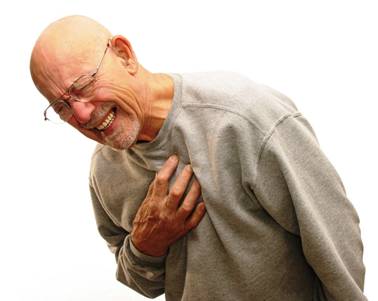
Not all heart attacks begin with sudden pain in the chest as seen in movies or television. In one study, for example, 1 / 3 of patients who had experienced a heart attack feels no pain in his chest, patients are usually elderly patients, or women who suffer from diabetes.

Signs & symptoms of a heart attack can also be different for each person. Many heart attacks are preceded by discomfort or pain is mild, there are even people who have no symptoms at all.

Here is a common symptom is felt during a heart attack:
1. Pain in chest
The most common symptom is felt during a heart attack is chest pain. This includes a new pain or perceived pain is often felt but with different patterns.

Most of the time heart attacks occur, the pain arises in the middle of the chest or on the left side of the chest that lasts for several minutes or disappear & reappear. The pain can feel like pressure, squeeze or chest pain, whether mild or severe.

Symptoms of angina can be similar to the symptoms of a heart attack. Angina is chest pain that occurs in people who have coronary heart disease, usually occurs when they are active activity. The pain of angina, may occur for a few minutes & will disappear when they are resting.

Chest pain that does not go away even after rest, can be a sign of a heart attack. We recommend that every heart attack is felt sent to the doctor.

2. Other symptoms are often felt in the moments before or during a heart attack are:
  • Discomfort in your upper body, either in the arm (can be either one or both), back, neck, chin, or upper abdomen. Shortness of breath, can occur before or during chest pain arises. Nausea, vomiting, sudden dizziness & arise in a cold sweat.
  • Difficulty sleeping, feeling extremely tired or lack energy.

Not everyone who had a heart attack will experience the same symptoms. But more and more of the above symptoms are felt, the greater the likelihood of experiencing a heart attack.

Life after suffering a heart attack
If you have previously suffered a heart attack, then it is arguably the heart has been damaged. This can affect the heart rhythm and the strength to pump & drain the blood.

People who have suffered a heart attack are also at risk for having another heart attack or other conditions such as stroke, kidney problems & peripheral vascular disease.

But there are some things you can do to reduce the risk of experiencing these health problems. For example, by cardiac rehabilitation, a program of health maintenance by way of lifestyle changes to improve heart health & quality of life.

Changes made include the use of drugs, dietary changes, increased physical activity, smoking cessation & stress management. The doctor will also give advice on daily activities are carried out, including setting work activities, travel, sexual activity or sport.

In order not to have a heart attack
There are several factors that can increase the risk for heart attack. Risk factors exist that we can control, but there also can not be controlled.

Risk factors that can not be controlled are:

1. Age
The risk for heart disease will have increased in men after age 45 years & in women after age 55 years (after menopause).
2. Family history
The risk for having heart disease will also increase when a father or brother had a history of men who have heart disease diagnosed before age 55 years or mother or sister who had heart disease diagnosed before age 65 years.
3. Pre-eclampsia
Developing pre-eclampsia also increases the risk for having heart disease. Pre-eclampsia is a condition that occurs during pregnancy, marked by the rise in blood pressure & presence of excess protein in urine. Pre-eclampsia is often associated with risk of various diseases of the heart, such as coronary heart disease, heart attack, heart failure & high blood pressure.

While the risk factors that can be controlled are: While the risk factors that can be controlled are:

  • Smoke
  • High blood pressure
  • High cholesterol levels
  • Overweight & obesity
  • Unhealthy eating patterns (eg eating foods high in salt, fat & cholesterol) Lack of physical activity
  • High levels of sugar in the blood due to diabetes

Ways to prevent heart disease & heart attacks is by controlling the above risk factors by:


1. Stop smoking
Smoking is a major cause of various diseases such as heart disease & lung cancer. So if this time includes one of the people who smoke, quitting smoking is the best way to avoid the occurrence of heart attacks.

2 Doing regular exercise
If you want to keep the heart healthy, then do regular exercise is very important to do. Exercise will improve blood flow and helps keep the heart to work effectively.

For those who do not have a history of heart disease, regular moderate exercise for 30 minutes a day at least 5 times a week is recommended. Examples of these sports is to walk fast or climb a hill.

3. Adjust your diet
To be heart healthy, low fat diet rich in fiber are encouraged, such as whole wheat or various kinds of vegetables & fruits. Limit your salt intake is also up to no more than 6 grams (1 teaspoon) a day. Consume too much salt will increase blood pressure.

Also avoid eating foods high in saturated fat content, because it can increase blood cholesterol levels. Foods that are high in saturated fat include are: meat, sausages, offal, butter, cream, cheese, cakes & biscuits and foods containing palm oil / palm oil.

To lower cholesterol, you should consume foods that contain unsaturated fats, such as fish oil, avocados, nuts, or sunflower oil from olives.

4. Limit alcohol consumption
Consuming alcohol in large quantities can cause blood pressure to rise, as well as cholesterol levels. Therefore, by not consuming alcohol or limit alcohol consumption according to the recommended is the appropriate way to reduce the risk of having high blood pressure or heart attack.

The number of recommended alcohol consumption limits are: in men 3-4 units / day, while the women 2-3 units / day. 1 unit of alcohol is equivalent to a small glass of wine / wine.

5.  Losing weight
There are many benefits associated with weight loss. If it can achieve an ideal body weight according to height, it can help lower cholesterol & blood pressure. By losing weight, then the risk for heart disease will also decline and life expectancy will also increase.

One way is successful enough to lose weight is by exercising at least 30 minutes every day, eat smaller amounts of & eat healthy snacks between meals. Gradual weight loss of 0.5 kg / week is recommended.

6. Other conditions
Some other conditions that may increase the risk for heart attack is hypertension & diabetes. That is to keep these conditions are always controlled can also help reduce your risk of heart attack.

This includes, taking drugs that doctors routinely administered, a healthy diet & control to the doctor regularly.

Causes, Mechanisms, and Symptoms of Coronary Heart Disease (CHD)